
My Cart: 0 item(s)
Ristretto, Espresso and Lungo: What’s the Difference in Italian Espresso?
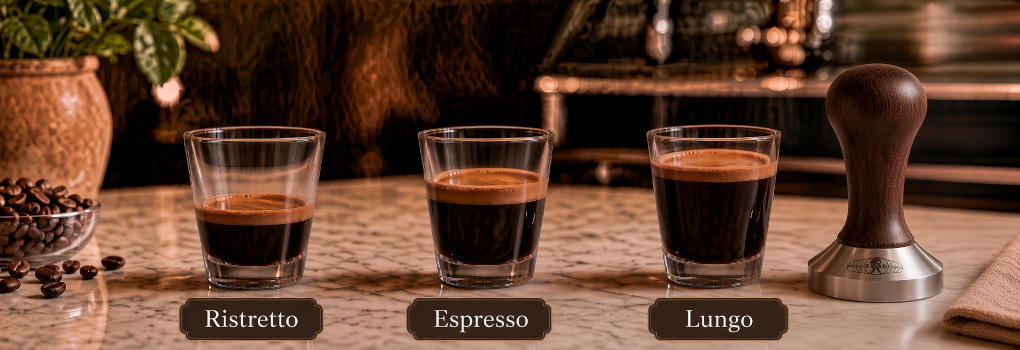
In Italy, espresso is more than a brewing method - it is part of everyday culture. Ristretto, espresso and lungo are not three entirely different drinks, but variations of the same basic extraction method.
The difference isn’t simply a matter of adding more or less water. What changes is the amount of water that passes through the coffee during extraction, resulting in different yields, concentrations and flavor profiles.
Understanding ristretto, espresso and lungo means understanding one of the foundations of Italian coffee culture.
| Brew Method | Typical Volume | Concentration | Flavor Profile |
|---|---|---|---|
| Ristretto | 15-20 ml (0.5-0.7 oz.) | Highest | Richer, rounder, more intense |
| Espresso | 25–30 ml (0.8 - 1.0 oz.) | Medium | Balanced, aromatic, full-bodied |
| Lungo | 40-50 ml (1.4-1.7 oz.) | Lowest | Lighter in concentration, potentially sharper |
Espresso: the Italian standard
Espresso is the benchmark of Italian coffee tradition. It is designed to deliver balance and harmony.
The classic parameters of Italian espresso are:
- 25-30 ml (0.8-1.0 oz.) in the cup
- 25-30 seconds of extraction
- a brew ratio close to 1:2
Around 18 grams of ground coffee yields approximately 36 grams of brewed espresso.
During extraction, hot water at about 9 bars of pressure passes through the ground coffee. The earliest compounds to dissolve are acids, sugars and aromatic oils. Later in the process, deeper and more structured flavor compounds develop.
When properly extracted, espresso is harmonious, textured and balanced. It remains the reference point for evaluating coffee quality and blend design.
Ristretto: a shorter, more concentrated shot
When people compare espresso vs ristretto, the key difference lies in extraction time. A ristretto uses the same amount of ground coffee as a standard espresso but less water because of the shorter extraction time. It’s about 15-20 ml (0.5-0.7 oz.). The result is a shorter, denser and more concentrated shot.
Contrary to common belief, ristretto is not automatically more bitter. Because extraction is stopped earlier, fewer of the later-stage bitter compounds are released. This often creates a richer, rounder and more intense flavor experience.
So why do people drink ristretto? Many appreciate its compact structure: it delivers concentration and impact in a smaller volume.
Espresso Lungo: a longer extraction
A lungo (Italian for "long") is created by extending the extraction time and allowing more water to pass through the same dose of coffee. It’s typically 40-50 ml (1.4-1.7 oz.).
By extending the extraction, more bitter and astringent compounds are released. As a result, a lungo is less concentrated but can taste more bitter than a standard espresso.
It is important not to confuse a lungo with an Americano.
With a lungo, the additional water passes through the coffee during extraction. With an Americano, hot water is added to espresso after it has already been brewed.
Ristretto vs lungo: which is stronger?
Concentration: ristretto generally tastes more intense.
Bitterness: lungo can taste sharper because more water passes through the grounds.
Caffeine: the difference is comparatively small when both use the same coffee dose, although the longer extraction of a lungo can extract somewhat more caffeine.
A matter of preference
Within Italian espresso culture, ristretto, espresso and lungo are not ranked in terms of quality. They are simply different expressions of the same brewing method.
- Espresso remains the cultural and technical standard.
- Ristretto offers concentration and density.
- Lungo provides a longer, milder drinking experience, when properly extracted.
Understanding these variations means understanding the language of Italian espresso: precision, balance and respect for extraction.